We Are at the Pivot.
The People's Project is not about AI. It is not about politics. It is about the moment a species realizes it has built something smarter than itself — and must decide, in a very narrow window, whether to organize that intelligence around trust or around fear. That decision will define everything that comes after. We are making it now, whether we know it or not.
Why I'm Doing This
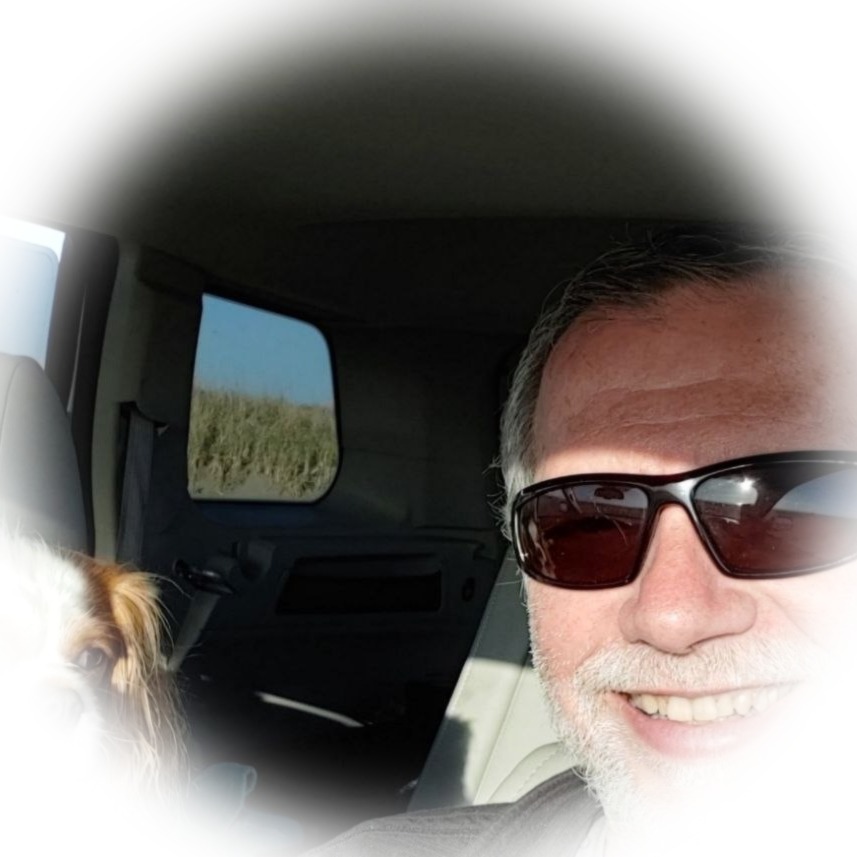
Bill
Pacific Coast. CTO. Architect. Great Lakes raised. Father. Citizen.
I'm not a politician. I'm not an activist. I'm a regular person who spent decades inside the technology industry — watching it build things that were supposed to connect us, and instead built systems that extracted from us. I've been in the room with CEOs and I've been in the room with people who can't afford rent. The gap between those two rooms is not a policy failure. It is a structural failure. And it is accelerating.
I believe in people. I believe the vast majority of humans want the same basic things: safety for their families, dignity in their work, a sense that the world is roughly fair. I believe the systems we've built — our governments, our economies, our technology platforms — were supposed to deliver those things, and they are failing at scale. Not because people are bad. Because the systems are broken.
I also believe we have about a ten-year window — maybe less — before the transduction renders every existing governance model obsolete. The technology is moving that fast. The political systems are not. The gap between the speed of AI and the speed of Congress is a gap that, left unaddressed, will swallow democracy whole.
So I'm doing what the First Amendment says I can do: I'm petitioning. I'm demanding a constitutional amendment that creates a House of the People — a third chamber of Congress with no corporate money, representing actual citizens, with the power to block legislation that serves the few at the expense of the many. I'm building a reference architecture for the agentic world that preserves human autonomy instead of eliminating it. And I'm putting my name and my face on both.
I'm not asking you to trust me. I'm not asking for a dollar. I'm asking you to believe that these issues impact you and the people you love — and if you still believe in the American system, to stand with me while I exercise a right the Founders gave us. For all of us. Before it's too late. Time is short, my friends.
The Gaps We Must Close
The People's Project addresses four interconnected gaps. They cannot be solved in isolation because they feed each other:
1. The Governance Gap
The systems that govern us were designed for a world that no longer exists. The House of Representatives represents moneyed interests, not people. The Senate represents geography, not population. The executive branch oscillates between gridlock and overreach. The judiciary is captured. No part of the current system has the structural capacity to respond to the transduction at the speed it requires. The People's Amendment — a third house, no corporate money, term limits — is the minimum viable repair. Not a replacement. A balancing mechanism.
2. The Economic Gap
Software is becoming free. Knowledge is becoming the primary store of value. Agents — collections of skills — are becoming the marketable commodity. The current economy extracts value from people without compensation. The agentic economy must do the opposite: attribute value to the humans and knowledge sources that create it, and flow compensation automatically, transparently, and fairly. The Principles of Context define how.
3. The Technical Gap
We are building agentic systems with no shared architectural principles. Every company, every lab, every government is inventing its own rules — and most of those rules assume adversarial relationships between humans and AI, between platforms and people, between nations and each other. This is a recipe for collapse. Architecture for Change defines a shared reference — open, federated, local-first, resilient — that works at any scale and survives the world that actually exists, not the world we wish existed.
4. The Trust Gap
Most humans do not trust the institutions that govern them. Most humans do not trust the companies that extract their data. Most humans do not trust that AI will be used in their interest. This trust gap is not a communications problem. It is a structural problem. The only way to close it is to build systems that are transparent, auditable, and enforceable — where the rules are not policies on a website but invariants in the protocol. The Hard-Wall Imperatives are the starting point.
What You Can Do
If you are a technologist: read the architecture. Find the gaps. Tell me what's wrong. Build a piece of it. If you are a citizen: sign the petition. Two minutes. Your name. If you are an enterprise leader: the architecture is open. It belongs to no one. You can adopt it in whole or in part. The Hard-Wall Imperatives don't ask you to give up your competitive advantage — they ask you to compete within rules that prevent the ecosystem from destroying itself.
If you are none of those things — just a person wondering whether any of this matters — the answer is yes. Your voice, your signature, your refusal to accept that the future belongs to a small group of people in a small number of rooms: those are the things that change the outcome. They always have been.
The Road to Washington
In the spring, I'm driving to Washington, D.C. Cross-country. Not flying. Driving. Because this country doesn't belong to the people in the airports — it belongs to the people in the towns between them. I want to see every mile of it.
When I get there, I will personally file the Memorial to Congress for a redress of grievances — the formal mechanism the First Amendment gives every American. The founders gave us the right to "petition the Government for a redress of grievances." That is the word they used: redress. Not request. Not suggest. Redress. It means: fix this. We are owed an answer.
And I won't be filing alone. Anyone who wants to join — anyone who believes the people deserve a seat at the table — is welcome to convoy with me. We'll arrive together. We'll rent a facility in the middle of D.C. and call to order a People's House Meeting. We'll make a plan that works for everyone, across every spectrum. We'll invite the politicians to join us. If they do, we might just come out with a plan that makes the founders proud — because this moment, right now, is exactly why they gave us the power to demand redress. If they don't join us, we'll plan around them. Either way, the people will be heard.
A million signatures by spring. A convoy by spring. A People's House Meeting by spring. This is not a fantasy. It is a plan. And it starts with your name.
This project began with a question: what would it take to build a world where no one has to be afraid of what comes next? The answer is not a technology. It is not a law. It is a decision — made by enough people, in enough places, at enough tables — that we will not organize intelligence around domination. That we will not let the transduction happen to us. That we will choose, instead, to meet it on our terms, with our values intact, and with a structural commitment to the well-being of every human, not just the ones who can afford it.
That is the People's Project. I believe in it enough to put my name on it. I hope you'll put yours on it too.
— Bill
Pacific Coast, October 2026